
By Dan Kollias, Kollias Olive Oil
What does acidity mean in olive oil? Olive oil acidity is a laboratory measurement of free fatty acids, expressed as a percentage of oleic acid. It does not refer to sourness or pH, and you cannot taste it. For extra virgin olive oil, free acidity must be no more than 0.8%. In general, lower acidity can indicate that the olives were healthy, handled carefully, and milled quickly after harvest.
Is olive oil acidic or alkaline? Chemically, olive oil does contain free fatty acids, but “acidity” in olive oil is not the same thing as the pH-based acidity people associate with foods like lemons or vinegar. Olive oil acidity is measured as the percentage of free fatty acids, expressed as oleic acid. It cannot be judged by taste.
Is Olive Oil Acidity the Same as pH? No. In olive oil, “acidity” usually means free fatty acidity, a laboratory measurement of free fatty acids expressed as a percentage of oleic acid. It is one of the standards used to evaluate olive oil quality. In contrast, pH measures how acidic or alkaline a water-based solution is. Because olive oil is not water-based, pH is generally not the useful measure consumers should look at when judging olive oil quality. So when an extra virgin olive oil is described as having 0.35% acidity, that does not mean it has a pH of 0.35.
Acidity Cannot Be Measured by Taste. Typically, people think of foods that are high in acidity as being sour, like lemons. In reality, an olive oil’s acidity has very little to do with whether it tastes sweet, salty, sour, or bitter. As such, an olive oil’s acidity cannot be detected by tasting.
A History Lesson. Acidity is the most frequently cited of all the parameters that are measured in the chemical analysis of olive oil. Once upon a time, the level of acidity of an olive oil commonly appeared as the primary claim of its quality. A lower acidity score was then, and is now, generally considered better, but not always.
For example, oils can be refined to artificially get that acidity number down. However, the very process of refining greatly diminishes the quality of the oil, removing flavor and nutritious compounds such as antioxidants. Refining can give a low-quality oil a deceptively good (i.e., low) acidity score.
Because low acidity does not necessarily correspond to high quality, allowing labels to state the products acidity without any additional context led to a lot of confusion among consumers. As a result, the regulations governing labeling were changed. Currently, if a producer wishes to include the acidity of the olive oil on the label, additional information is required on the label. The producer must include information reflecting the quality characteristics of the oil to provide further context. The required information includes the levels of peroxides, waxes, and ultraviolet absorption (K270, K232 and ΔK). We’ll get into those in another blog post.
As we’ve mentioned in this blog and on our website, many producers, wholesalers, and middlemen in the olive oil business blend their oils with lower quality oils, re-branding, re-packaging, and frequently misrepresenting the product along the way. It’s a shady business. Thus, when the labeling requirements changed, these producers chose not to supplement the acidity information with the extra data required. Instead, almost all of them simply eliminated any mention of “acidity” from their labels altogether. To this day, if you look at the various commercial brands of olive oil on your local grocery store shelf, it is almost impossible to find out any information about the acidity of any given olive.
What Is Acidity, In Layman’s Terms? We’ll get to the science in a minute. But in general, measuring an olive oil’s acidity is fair way to approximate the freshness of the olives at the time they are pressed into oil. Olives are a fruit. Much like apples, oranges, and grapes, the freshness of the fruit is protected by its skin. Once a fruit’s skin is broken, the process of rotting accelerates quickly.
This is perhaps most easily observed in apples, which can stay fresh for weeks but will start to turn brown within a few minutes of being cut. In layman’s terms, the acceleration of the rotting process is accompanied by an increase in oleic acid. Thus, higher oleic acid levels are considered a bad thing, and to be considered “extra virgin” olive oil, it must be below the 0.8% acidity threshold.
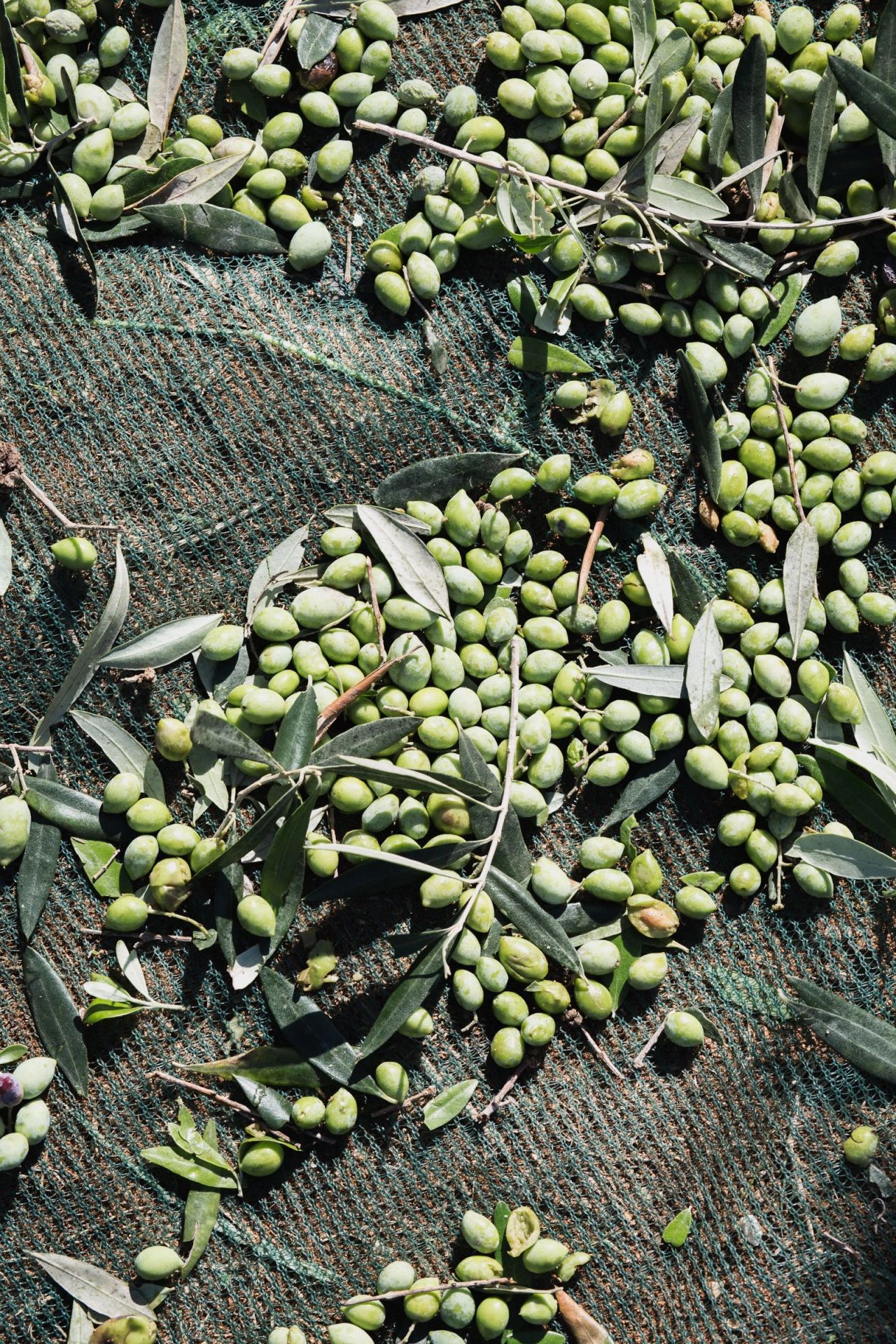
The skin of an olive can be innocently broken in many ways, despite the care of the grower. For example, they can be damaged by insects, hailstorms, falling to the ground, and being crushed in transportation from the farm to the mill. Thus, within a single harvest from a single farm, the acidity levels of the olive oil may vary from one tree to the next.
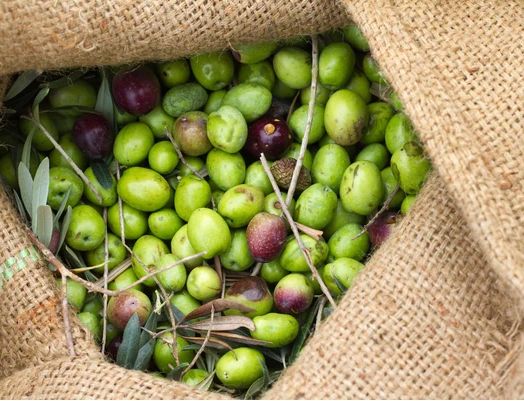
The skin of an olive can also be damaged in negligent ways, such as by being left on the ground for extended periods of time during harvesting, gathering them in plastic sacks which retain moisture rather than breathable burlap sacks, or by leaving them sitting around in large heaps at the mill for days on end, resulting in the olives at the bottom of the heap being crushed by the weight of the olives above.
Acidity does not increase a lot after the olive oil has been extracted from the fruit. At Kollias Olive Oil, we take great pains to care for our trees during the growing season. Then, harvest in a responsible way, gathering our olives in burlap sacks to prevent an accumulation of moisture. We press our olives into oil right away after harvesting to minimize the damage to the fruit and preserve the quality of the oil. As a result, our 2023 olive oil’s acidity levels were 0.358%, a level indicative of truly premium quality. Kollias has continued to test at similarly low acidity levels in subsequent harvests: 0.34% in 2024, and 0.35% in 2025.
There are other factors that affect acidity levels as well, such as the quality of the olive and its state of maturity at the time of harvest. Heat further accelerates the rotting process, which is why high-quality olive oil is always “cold pressed.” Finally, some people have a preference for the taste unfiltered olive oil (which is almost neon green in color), but the dregs that are removed by filtration can increase in acidity over time. Thus, our olive oil is always filtered to remove the dregs prior to packaging.
What Is Acidity, In Scientific Terms? Acidity is defined as the grams of free fatty acids (expressed as oleic acid) in 100 grams of olive oil. Thus, a 0.8% acidity score means there are 8 grams of oleic acid in 1,000 grams (1 kg) of olive oil.
Free fatty acids are produced when the fat triglycerides in oil react with oxygen and water, causing the fat molecules to break down, a process known as hydrolysis. Free fatty acids increase when triglycerides break down, often because the olives were damaged, rotten, overripe, poorly handled, or delayed before milling. Higher temperatures will also accelerate the oxidation process, so if the olive oil is heated at any point in the production process, that will also contribute to the development of free fatty acids.
How Low Is Kollias Olive Oil’s Acidity? Our 2025 Harvest Extra Virgin Olive Oil tested at just 0.35% acidity, well below the 0.8% maximum allowed for extra virgin olive oil. That low result reflects careful harvesting, healthy fruit, and prompt milling after harvest. Acidity is only one measure of quality, but it is an important indicator of how well the olives were handled before pressing.
The Bottom Line. It is important for olive oil to have a low acidity score, but to achieve that score in the right way. At Kollias Olive Oil, we do it right to make the best olive oil. We grow, harvest, and press our olives in accordance with the highest standards, resulting in premium quality oil with low acidity.
Want a broader look at olive oil quality? See our guide to polyphenols, acidity, peroxide value, K232, K268 and ΔK, including Kollias laboratory results from the 2023, 2024 and 2025 harvests.
Explore our collection of low-acidity single source early harvest olive oil.

